CenterforcreativityCall (562) 962-6442

Trim, Doors and Baseboards, Long Beach

The Paint People Actually Touch

Interior trim and door enamel work in a Long Beach, CA home

Walls get looked at. Trim gets grabbed, kicked, mopped against and leaned on. It wants a harder coating and far more prep than a wall does, and that is the part of the job we specialise in.

  • Doors taken off and laid flat
  • Two coats on every colour change
  • Enamel chosen for the room it lives in

Notes on Enamel

What we have learned about the paint on the surfaces people actually touch.

Why Trim Paint Chips, and What to Use Instead

Why Trim Paint Chips, and What to Use Instead

September 1, 2026

Call somebody out to look at chipped baseboards and they will usually talk about the paint. In our experience the paint is rarely the whole story. Trim fails for three reasons, and only one of them is the tin.

Trim Is Not a Wall, and It Never Was

Start with how the two surfaces get used. A wall is looked at. Somebody brushes a shoulder along the hallway once in a while and a picture hook goes in every few years. That is the entire load.

Now look at a baseboard. It takes a vacuum head driven into it every week, a mop against it, a chair leg, a toe, a dog. Look at a door. The edge by the handle takes a thumb every single time somebody walks through, and the bottom rail takes a foot when both hands are full. Look at a bathroom casing, sitting in steam every morning and drying out again by lunchtime, over and over.

Those are mechanical and moisture loads, not visual ones. A wall coating is formulated to look even across a large flat area and to touch up invisibly. It is not formulated to resist a thumbnail. Put a wall paint on a door edge and it will not survive a year, no matter how much the tin cost.

That is the first reason trim chips, and it is the easiest one to fix. Buy a coating built for the job.

The Second Reason Is Adhesion, and It Is the Big One

Here is the failure everybody recognises. The paint does not wear away gradually. It comes off in a flake, and when you look at the flake it is a clean, whole piece with an unblemished back face. It did not wear out. It let go.

That happens because the surface underneath was slick. A cured enamel is a hard, smooth, low energy film. Fresh paint laid onto it dries as a separate skin sitting on top of it, held on by very little. The first knock that gets under an edge takes a sheet off.

The fix is entirely mechanical and there is no shortcut in a can that reliably replaces it. Every square inch of the old coating has to be scuff sanded, dulled right across, so the new coat has a texture to key into. It is boring, repetitive, dusty work and it is most of what you are paying a painter for on a trim job. When people ask why refinishing a room of baseboard costs what it does, this is the answer.

Where the old coating is already lifting or flaking, sanding alone is not enough, because you are keying into something that is itself letting go. Those areas need a bonding primer, which is a product designed to grip a difficult surface and give the topcoat something sound to sit on.

There is a related trap in older houses. If the existing paint is an old solvent alkyd, and in the 1920s and 1930s bungalows around Belmont Heights, Rose Park and Bixby Knolls it very often is under all the later layers, then a waterborne coat over an unsanded, unprimed oil surface is close to guaranteed to fail. Sand it and prime it.

The Third Reason Is Everything That Was Skipped Before the Topcoat

The finish coat gets the attention because it is the part you see. The three steps before it decide how it looks.

Filling. Nail holes, splits in the mitres, the dent at the bottom of a door casing where the vacuum has been going for twenty years. Small holes take a lightweight filler. A door edge with a chunk missing needs a two part filler that can be shaped and sanded, because lightweight product in a structural spot will simply crumble out again.

Spot priming. Filler is porous, and so is any bare wood the sanding exposed. Paint soaks into a porous patch and dries with less binder at the surface, which reads as a dull ring in a satin or semi-gloss finish. You have all seen it: a wall of nail holes flashing matte through a glossy baseboard. Priming the fills takes ten minutes and it is skipped constantly.

Caulking. The joint at the top of the baseboard, the joint where the casing meets the wall, and the mitres. Caulk before the topcoat, tooled thin, so the paint film runs over it in one piece. Caulk applied afterwards looks like a repair, because that is what it is. And a caulk line that has split open is one of the clearest signs a room is due, because it means the joint has been moving without a coating holding it together.

So What Do You Actually Put On It

Three families are in common use and the choice is not arbitrary.

Waterborne alkyd is where most interior trim work has landed and it is what we reach for by default. It flows out the way a traditional oil enamel does, so brush marks settle instead of standing up in ridges. It cures genuinely hard, which is the whole point on a contact surface. It stays close to the colour you chose rather than yellowing in a dark hallway. It cleans up with water and it is low enough in odour to use in an occupied house.

Traditional solvent alkyd still earns its place on exterior jambs, thresholds and the occasional interior surface where the existing paint is old oil and adhesion is the priority above all else. It smells strongly, it needs mineral spirits, and in a room with little natural light it will go yellow. Use it on purpose or not at all.

Acrylic latex trim paint is quick, cheap and perfectly reasonable on a rental turnaround or where the schedule is tight. It never gets as hard as a waterborne alkyd, so a heavily used door edge will show wear sooner. That is a trade, not a mistake, as long as you make it knowingly.

Sheen, and What Each One Gives Away

The ladder runs flat, matte, eggshell, satin, semi-gloss, gloss. Each step up buys washability and scrub resistance, and each step up shows more of what is underneath.

Semi-gloss is the default for trim and it suits most houses. It wipes, it takes a knock, and it reads as trim against an eggshell wall.

Satin is the one to choose when the woodwork is old and no longer straight. A lot of original bungalow casing in this city has been painted eight or nine times and has a gentle waviness that gloss will find and satin will forgive. Raking afternoon light through a west facing window will show you exactly what your trim looks like before you commit.

Gloss is superb on a flat panel front door and unforgiving on anything with a history.

Two Coats. Not One

A single coat over a colour change looks fine while it is wet and patchy once it flashes off, particularly in the corners and against the wall where the film ends up thinnest. Two coats over any colour change is not an upsell, it is the job. If a quote is materially cheaper than the others and it does not say how many coats, that is the question to ask.

The other number worth understanding is cure time as distinct from dry time. Trim enamel is dry to the touch quickly and safe to handle gently the next day, but it goes on hardening for two to three weeks. That is why we ask people to leave freshly painted doors ajar for the first few nights. A soft edge pressed against a stop overnight is how doors get painted shut, and the mark it leaves does not sand out.

What Long Beach Does to All of This

Two local conditions matter more than the rest.

The marine layer keeps humidity up through most mornings for much of the year. High humidity slows the release of water from a waterborne film, which means a coat that would have been ready to recoat in four hours somewhere dry is not ready here. Push it and the film stays soft. In winter, in a north facing room, we simply plan the finish coat for the back half of the day.

Salt air off the harbour and the breakwater, plus hard afternoon sun on south and west elevations, is punishing on exterior doors and jambs. The pattern is chalking first, a powdery feel when you run a hand down the door, then fading, then edge failure. It shows up early on a coating not rated for it. On exterior work we check surface temperature rather than air temperature, because a door face in direct sun runs far hotter than the shade reading and a coating that flashes off too fast will not level.

When Not to Spend the Money

If the trim is grubby rather than failing, wash it. A degreaser and a cloth will tell you inside ten minutes which one you are dealing with. Grease and hand marks lift off and the finish underneath is sound and even. If instead you find chipping down to a previous colour, a chalky feel, split caulk lines or a yellowed cast on what used to be white, then the coating is done and washing it is postponement.

We would rather tell you to clean it. A repaint you did not need is the fastest way for a painter to be remembered badly.

If you want somebody to look at your trim honestly, call Centerforcreativity on (562) 962-6442. We work across Long Beach and the neighbouring coastal cities, and the walk through costs nothing.

Read the full article

Enamel Work on Trim, Doors and Baseboards

Six jobs we do more than any others, all of them on the surfaces that get handled.

  • Interior Door Enamel

    Doors taken off, laid flat, filled, sanded and coated with a waterborne alkyd that levels out brush marks and cures hard enough to shut without sticking. Hinges and hardware come off rather than getting masked around.

  • Baseboard and Casing Refinishing

    The full run, from de-glossing old enamel through filling nail holes, caulking the top joint and the mitres, spot priming the fills, and two finish coats. Semi-gloss or satin depending on how straight the wall behind it is.

  • Built-Ins and Cabinet Faces

    Bookcases, window seats and bathroom vanities. Degrease first, because kitchen and bath surfaces carry a film that stops adhesion, then a bonding primer and a hard enamel that will take a wipe down.

  • Front Doors and Exterior Jambs

    The most abused painted surface on a coastal house. Sanded back to a sound edge, a bonding primer where the old coating is failing, and an exterior grade enamel that will not chalk out on a west facing entry inside two summers.

  • Interior Walls and Ceilings

    Flat or matte on ceilings, eggshell on most walls, and something scrubbable in hallways and kids rooms. Done alongside the trim so the cut line between wall and casing is cut once, sharp, and not twice.

  • Stain Blocking and Repairs

    Water rings, crayon, smoke and knots bleeding through old woodwork. A shellac based or dedicated stain blocking primer on the affected area only, because a whole room of it is money you do not need to spend.

Enamel Pricing, Room by Room

Trim is priced by the linear foot of baseboard and casing and by the door, not by the square foot of the room, because the hours live in the prep and the cut line rather than the area. These are the ranges most Long Beach jobs land in, and the written number comes after somebody has actually looked at the existing coating.

Doors, Per Leaf$95 to $185
  • Off the hinges and laid flat
  • Both faces plus all four edges
Get a number
Trim Refinish, Per Room$320 to $760
  • Baseboard, casing and window stool
  • Filled, caulked and two coats
Get a number
Whole Interior, Walls and Trim$3,400 to $9,800
  • Cut once between wall and trim
  • Touch up jars left labelled
Book a walk through
  1. Prep is most of the jobSanding, filling, de-glossing and caulking is where the hours go on trim, and it is what separates a finish that survives a decade from one that chips off a door edge inside a year.
  2. Doors come off the hingesInterior doors get lifted off, laid flat on horses and coated on the level so the enamel flows out without running down the stiles. Edges and the top get done too, which is where moisture climbs in.
  3. We come back for the chipsAnything that chips, flashes or lifts on our own work within the first year gets fixed at no charge, and we leave you labelled touch up jars so the small marks never turn into a repaint.

Centerforcreativity paints trim, doors, baseboards, casing and built-ins in Long Beach homes. Wall work we do as well, because the two go together, but the trim is where the money in a paint job either shows up or disappears. A wall gets touched by a shoulder once a year. A baseboard gets a vacuum head driven into it every week, a door edge gets a thumb on it a dozen times a day, and a bathroom casing sits in steam every morning. Those surfaces need a coating built for abrasion and moisture, not the same flat that went on the ceiling.

Most of what goes wrong with trim paint is decided before the finish coat is opened. Old enamel that was never de-glossed will let a new coat sit on top of it like a skin, and it peels off in sheets when somebody scrapes a chair past it. Nail holes filled with lightweight spackle and not spot primed will flash dull rings through a satin sheen. Caulk joints skipped at the top of a baseboard leave a shadow line that no amount of paint fills. Sanding, filling, de-glossing, spot priming and caulking are most of the hours on a trim job, and they are the hours worth paying for.

Long Beach adds its own conditions. The marine layer sits over the city most mornings and keeps humidity up well past sunrise, so waterborne enamels can stay soft longer than the tin suggests, especially on a north facing room. Salt air off the harbour and the breakwater is hard on exterior doors and jambs. The 1920s and 1930s bungalows in Belmont Heights, Rose Park and Bixby Knolls carry deep original casing and picture rail that has often been painted eight or nine times, and the post-war stucco tract homes further east tend to have thinner ranch trim with a factory finish that needs de-glossing before anything new will grip. We plan the coating and the schedule around the house we are actually standing in.

Where the Brush Travels

We work across Long Beach and out into the neighbouring cities, mostly on occupied homes where the household stays in the house while we paint.

  • Long Beach, CA (90802, 90804, 90807, 90808, 90815)
  • Signal Hill, CA
  • Lakewood, CA
  • Seal Beach, CA
  • Los Alamitos, CA
  • San Pedro, CA

Call (562) 962-6442. If you are trying to decide between refinishing the trim and replacing it, we will tell you honestly which one your house needs.

Enamel and Sheen Questions

What sheen should the trim be?
Semi-gloss is the default and it is the right answer in most houses. It wipes clean, it takes a knock, and it reads as trim against an eggshell wall. Satin is the softer option and it is worth choosing when the trim is old and wavy, because gloss throws a raking light along every dip and every old brush run. Full gloss looks superb on a flat panel front door and unforgiving on anything else.
Why does new paint peel off my old trim in sheets?
Because the old surface was glossy and nobody knocked the shine off it. A cured enamel is slick, and a fresh coat laid straight onto it forms a film that is sitting on the surface rather than gripping into it. The fix is mechanical, a scuff sand over every square inch, plus a bonding primer anywhere the old coating is already lifting. It is dull, repetitive work and it is the difference between ten years and one.
How long before I can close the doors and put things back?
Dry to the touch is not the same as cured. A waterborne alkyd on trim is usually dry enough to recoat the same day and safe to handle gently by the next morning, but it is still hardening for two to three weeks. Doors can be hung again the following day if the edges have had a full day, though we ask you to leave them ajar for the first few nights so a soft edge does not stick to the stop. In a Long Beach winter, with the marine layer keeping mornings damp, add a day to all of that rather than pushing it.
Can you paint over the dark stained woodwork in a bungalow?
Yes, and it is a decision worth sitting with for a week first, because it is effectively permanent. Stripping painted casing back to bare wood later is brutal work. If you do go ahead, the sequence matters. Degrease, scuff sand, then a stain blocking primer, because old varnish and the tannin in fir and redwood will bleed a brown haze straight through a waterborne topcoat otherwise. Then two finish coats.
How do I know the trim needs redoing rather than cleaning?
Look at the door edges and the baseboard behind where furniture sits. Chipping down to a different colour, a chalky feel on a west facing front door, caulk lines that have split open at the top of the baseboard, or a yellowed cast on what used to be white all mean the coating is done. If it is only grubby, a wipe down with a degreaser will tell you inside ten minutes, and we will say so rather than sell you a repaint.
Do you paint while we are living in the house?
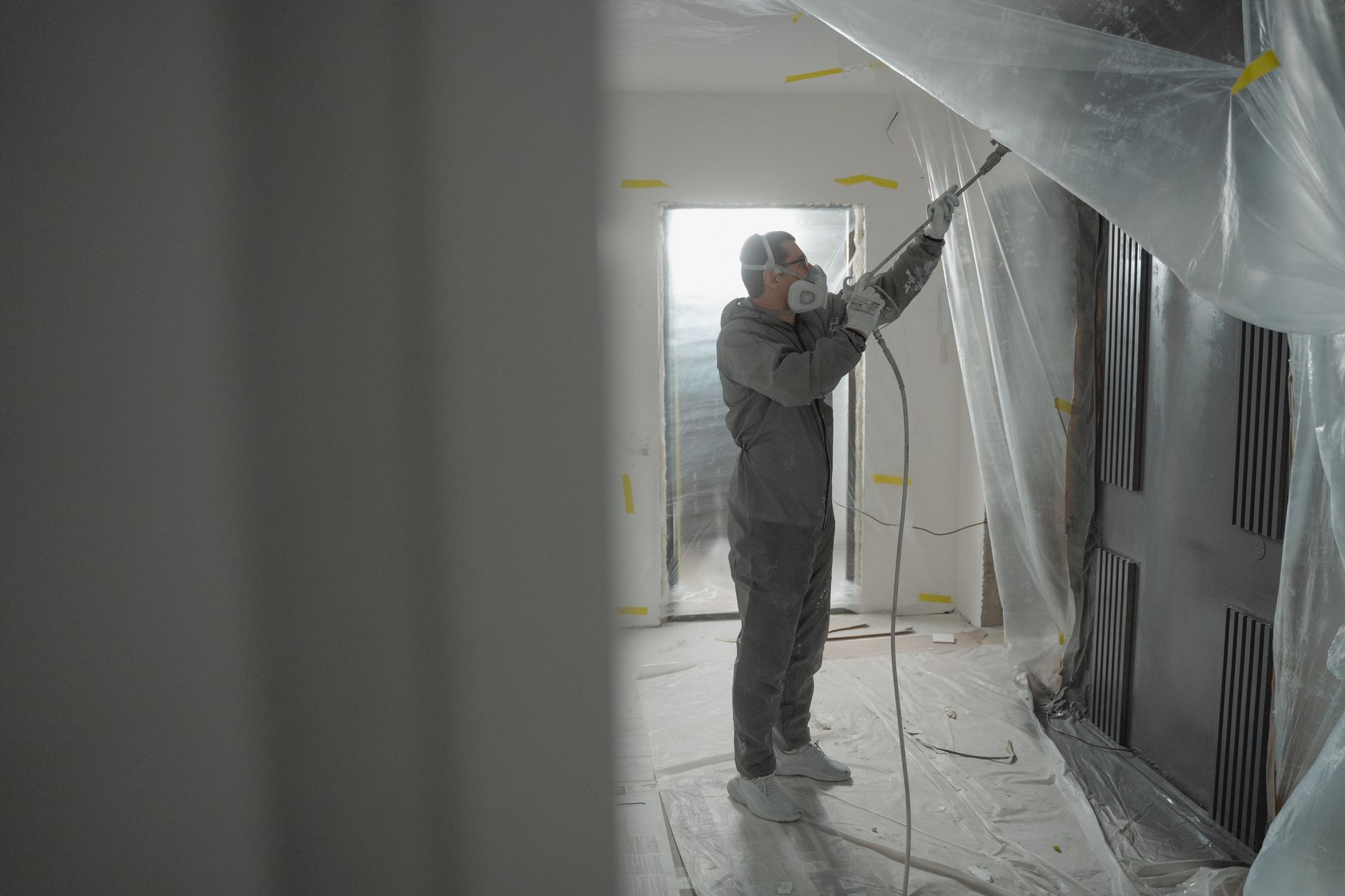
Almost always, and it shapes how we work. One or two rooms are in play at a time, floors are covered, doorways are sealed off, and everything gets cleared up at the end of each day rather than left out overnight. Low odour waterborne products make an occupied house workable in a way that old solvent enamels never did, though we still ventilate and we still tell you which room to stay out of.

Get the Trim Painted Properly

If your baseboards are chipped down to a previous colour, if a door is sticking because it has been painted shut, or if the front door has gone chalky in the sun, that is worth an hour of somebody's time to look at. We will walk the house, tell you what needs doing and what does not, and put a real number in writing. If the honest answer is that the trim only needs cleaning, you will hear that too.

Call (562) 962-6442